

A guitar is more than an instrument; it’s an important tool for creative expression and an investment. Properly caring for and maintaining your guitar helps to ensure that this vital partner in your musical journey remains reliable, playable, and sounding its best every single time you pick it up. Whether you’re a beginner who is just learning the chords or a seasoned musician, maintaining your guitar properly contributes to your performance and overall enjoyment. On the other hand, neglecting your instrument can lead to a host of issues, including tuning instability, poor sound quality, and permanent damage.

The Importance of Proper Guitar Maintenance
Maintaining your guitar isn’t just about keeping it clean; it directly impacts three key areas:
- Sound Quality: A well-maintained guitar will consistently produce a rich, full, and accurate tone. Dirty guitar strings, loose hardware, and poor intonation can dull your sound and make it unpleasant. Regularly cleaning your instrument, changing the strings, and making adjustments can help to ensure the clarity and projection that musicians rely on.
- Longevity: A guitar is made from organic materials and is susceptible to environmental damage. Humidity, temperature changes, and neglect can cause warping, cracks, or corrosion in materials, including wood and metal. Proper storage, routine maintenance, and immediate attention to small issues can help to prolong the life of your instrument and keep it in good working order.
- Resale Value: Guitars, like any other investment, hold better value if properly maintained and kept in excellent condition. Scratches, rusted parts, or a warped neck can significantly decrease how much your guitar is worth. Regular and preventative maintenance ensures that your guitar retains its aesthetic and market value.

Intonation
Intonation refers to the accuracy of the pitch across the fretboard, and a properly tuned guitar ensures that every note you play is in tune. When the intonation is off, chords sound dissonant, especially in higher positions.
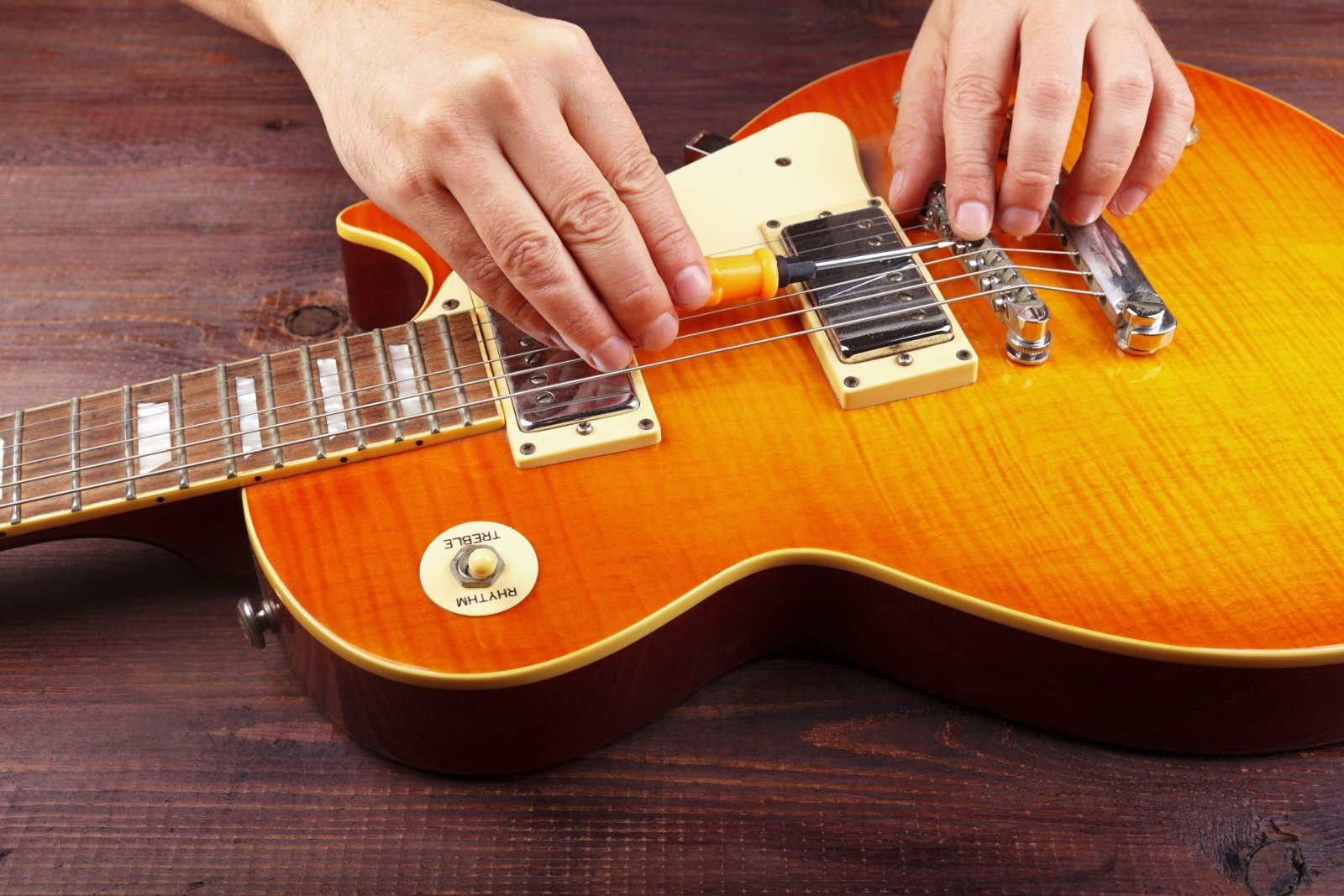
Intonation issues can occur when the guitar strings have worn out, bridge saddle positions are incorrect, or environmental factors like changes in humidity or temperature are at play. To check for proper intonation, use a tuner and compare the pitch of an open string and the same string fretted at the 12th fret. If the fretted note is sharp or flat, adjust your instrument to correct it. On electric guitars, intonation is usually corrected by moving the bridge saddles forward or backward with a screwdriver. On acoustic guitars, it often requires more nuanced adjustments or professional help from a luthier.
Electric Guitar Strings
Choosing the right string depends on your style, tone preferences, and how frequently you play. Those who play the electric guitar have their choice of a variety of string materials, each offering unique tonal characteristics:
- Nickel-Plated Steel Strings: The most common type of string to be used on electric guitars, nickel-plated steel strings provide a balanced tone that is bright and warm. They are durable and well-suited for a wide range of genres, including blues, rock, and metal.
- Pure Nickel Strings: These strings offer a warmer, vintage tone with less brightness than nickel-plated guitar strings. They are ideal for guitarists who play classic rock, jazz, and blues and tend to feel smoother under the fingers.
- Stainless Steel Strings: Known for their bright tone and excellent corrosion resistance, stainless steel strings are great for guitarists with acidic sweat or those seeking more aggressive articulation. They last a long time but feel a bit rougher on the fingers.

Acoustic Guitar Strings
Acoustic guitars rely heavily on string choice for tone shaping. Each string type has different musical applications, and experimenting with them can lead to exciting discoveries and a better understanding of tone. Three of the most common types of acoustic guitar strings are:
- 80/20 Bronze Strings: Composed of 80% copper and 20% zinc, these acoustic strings produce a bright, crisp sound. They’re ideal for cutting through in live performances and can be heard clearly when played alongside other instruments and vocals, making them a good option for rhythm guitarists and soloists, but they can lose their brightness faster than other types of strings and may need to be changed more frequently.
- Phosphor Bronze Strings: These acoustic guitar strings have a slightly warmer tone compared to 80/20 bronze and are more durable and resistant to corrosion, making them a favorite among singer-songwriters and guitarists who want a well-rounded sound.
- Silk and Steel Strings: These combine metal with silk threads for a soft, mellow tone and easier playability. They’re great for fingerstyle players, those who don’t use picks, or those with sensitive fingers.
- How to Restring an Acoustic Guitar
Cleaning and Maintaining Guitar Strings
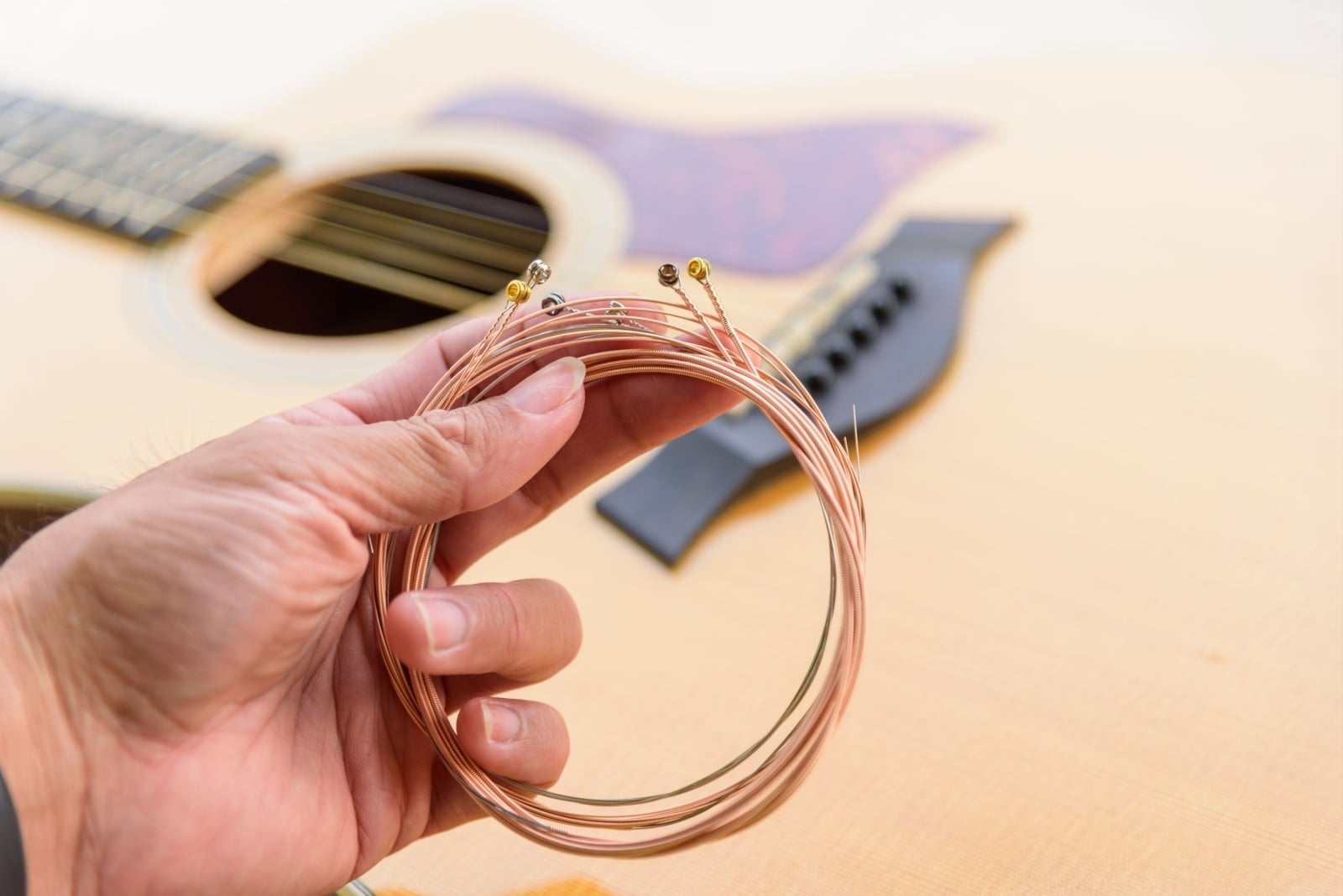
Over time, dirt, sweat, and oils from your fingers build up on your guitar strings. This eventually leads to a dulled tone and increased wear. To prevent this, clean your strings after every session using a soft cloth and a dedicated string cleaner or isopropyl alcohol. Wipe along the full length of each string, top and bottom, to remove grease, dirt, and grime.
Maintaining the entire guitar should also include:
- Keeping the body and neck free of dust and fingerprints using a microfiber cloth
- Using lemon oil (for rosewood/ebony fretboards only) to hydrate and clean the fretboard
- Checking and tightening hardware, such as strap buttons and tuning pegs
- Storing the guitar in a case or on a guitar stand to avoid damage

How to Change Guitar Strings
Every guitarist needs to learn how to change guitar strings. It’s a fundamental maintenance task that should be done regularly, but the frequency depends on how often you play your instrument. Casual guitarists who play once or twice a week can get away with changing their strings every three to four months, but someone who plays daily will need to change their strings every two to four weeks. Professional musicians usually change their strings before every performance to ensure the best possible tone and reliability. But no matter how frequently or infrequently you play, it’s good to always have a spare set of strings ready to go in case one should break while you’re playing.
Step-by-Step Guide to Changing Guitar Strings:
- Loosen and Remove the Old Strings: Manually or with the help of a string winder, loosen each string and remove it from the tuning peg and bridge.
- Clean the Guitar: Take advantage of the bare fretboard to wipe down the neck and body, especially around the frets and bridge.
- Insert New Strings: For electric guitars, thread the new strings through the bridge (often through the back or bridge plate). For acoustic guitars, insert them into the bridge pin holes and reseat the pins.
- Wind the Strings: Pull each string through the tuning peg and leave some slack. Begin winding while ensuring that the coils wrap neatly downward on the peg for optimal tension and tuning stability.
- Tune and Stretch: Tune each string to pitch, then gently stretch it by tugging it away from the fretboard and retune it. This prevents slippage and stabilizes the tuning.
- Final Tuning and Trim: Once all strings are stable, trim the excess string and fine-tune your guitar.

Luthier Services
For guitarists who are serious about the care and proper maintenance of their instruments, luthier services might be an option worth investing in. A luthier is an artisan who builds, repairs, and maintains stringed instruments. A skilled luthier is an invaluable resource for guitarists, particularly when facing issues beyond routine care.
Luthiers usually offer a wide range of services, such as fret dressing, neck adjustments, bridge repairs, crack fixes, and full instrument setups. They can fine-tune your instrument to match your preferred playing style, improving comfort and performance. Annual visits to a luthier for a setup can dramatically enhance playability and tone. This is especially true if the instrument has experienced significant environmental changes. Whether you’re customizing your instrument or addressing buzzing frets, warped necks, or faulty electronics, a luthier can make sure that your guitar remains in optimal playing condition.
- What Is a Guitar Luthier?
- Guitar Humidity: The Ultimate Luthier’s Guide
- How to Get Started Building and Repairing Instruments
- Advice for Aspiring Luthiers
Taking care of your guitar is essential to preserving its sound, functionality, and value. Regardless of the type of guitar you play, how often you play, and in what capacity you play, proper care can help to transform your guitar from a tool into a musical companion with which you have a strong and reliable connection. By taking a few minutes to sit down on your couch and give your guitar the attention it deserves, you can ensure that your instrument continues to inspire you and others for years to come.

Additional Guitar Resources
- Treating Your Instrument With Care, Even When it’s Not Being Played
- Five Easy Tips for Acoustic Guitar Care
- Fender’s Electric Guitar Care Tips
- Guitar Digital Handbook
- Theater Sectional Sofas
- The Invention of the Electric Guitar
- Why Learn to Play the Electric Guitar?
- Home Theater Seating
- Finger Exercises for Guitarists
- The Best Guitars for Beginners
- Sofas for Home Theaters
- 14 Easy Chords for Beginners
- Designing a Guitar Practice Schedule