

Jazz is one of the most expressive and creative styles of music, and the saxophone plays a big part in that sound. For high school students who want to play jazz sax, there’s a lot to explore. From learning how to control your breath to mastering tricky fingerings, the saxophone offers plenty of challenges, but the music you can make once you hone your skills makes it all worthwhile.

The Mouthpiece and Breath Control
When playing jazz saxophone, your sound starts with how you use the mouthpiece and control your breath. Using the mouthpiece requires a good embouchure that will let the reed vibrate freely and help you produce a clear, focused tone. Start by keeping your bottom lip slightly rolled over your bottom teeth, creating a soft cushion for the reed. Your top teeth should sit lightly on the mouthpiece, and your lips should create a seal around it.
The way you blow air through the saxophone has a big effect on your tone, volume, and ability to play long phrases smoothly. Keep your cheeks relaxed; avoid puffing them out. Good saxophone playing depends on steady, full airflow, which comes from breathing with your diaphragm, not just your chest. Sit up straight in your seat, or stand up to play. Try placing a hand on your stomach as you breathe in; if your hand moves out, you’re doing it right. Practicing long tones (holding a note steadily for several seconds) is one of the best ways to build stronger breath support and gain better control.
Getting this right might feel awkward at first, but with regular practice, your breath control and embouchure will both become second nature, and your sound will get stronger and more consistent.
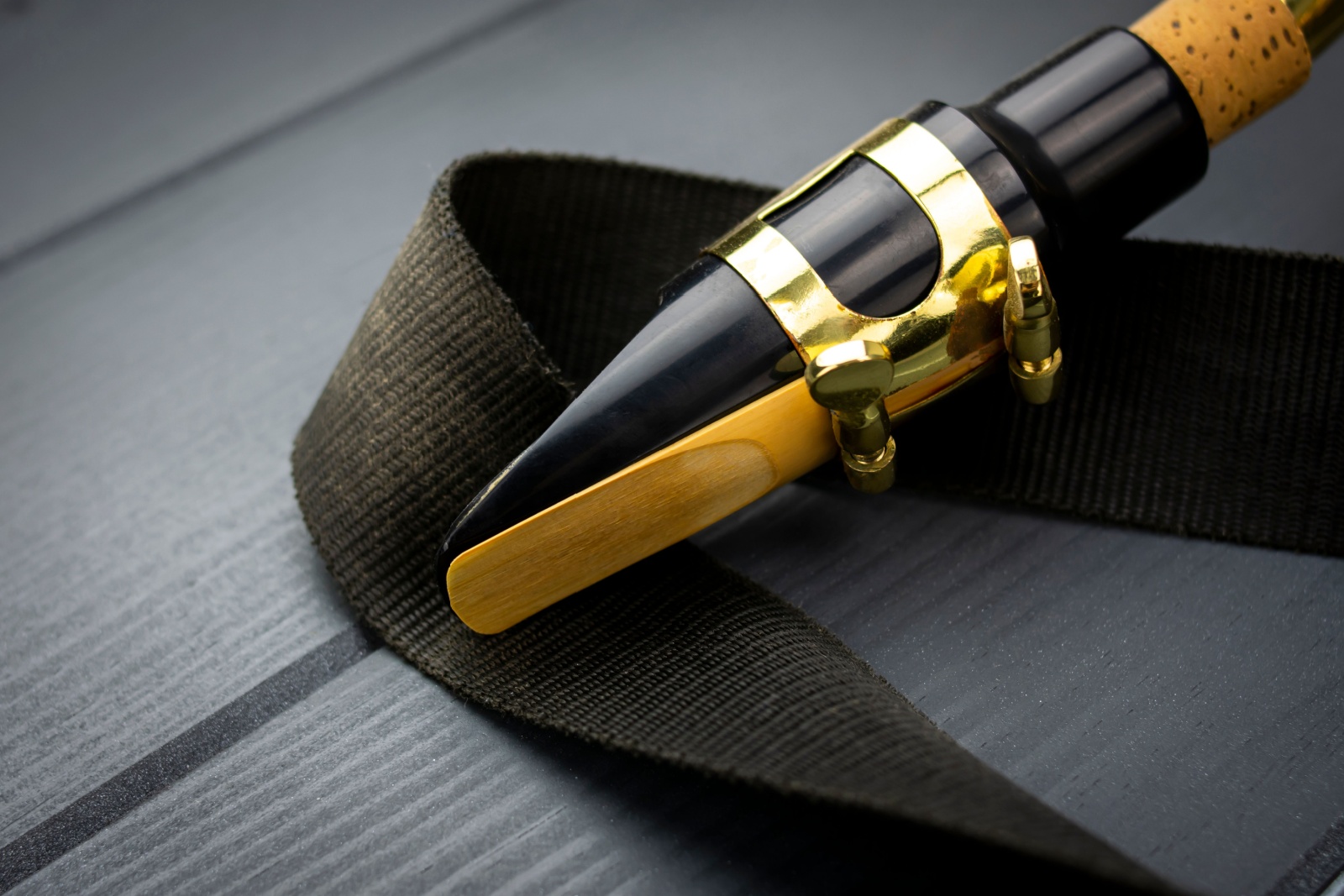
Jaw Position and the Saxophone’s Tone and Pitch
How you hold your jaw while playing can have a big influence on your saxophone’s sound, affecting both the tone and pitch of each note. If your jaw is too tight, the reed can’t vibrate fully, and your sound may come out thin, squeaky, or sharp. If your jaw is too loose, your tone might sound flat or dull, and the pitch may drop too low. The goal is to find a balanced, steady position where your jaw supports the reed without clamping down on it.
You can also change the notes you play by moving your jaw. Pulling your jaw back a bit makes for a warmer, darker tone, while moving your jaw forward makes the tone brighter. And intentionally tightening or loosening your jaw is also a key technique for jazz saxophone players, allowing you to bend the pitch slightly as you play. As you practice and listen to yourself play, you’ll get a better feel for how even small changes in how your jaw is seated can make a big difference in your sound.

Fingering Techniques
Fingering on the saxophone is how you play different notes. While the basic fingerings are the same for classical and jazz sax, jazz often involves fast runs, jumps, and complex patterns. It helps to know your scales and arpeggios really well, because jazz solos often use these patterns in creative ways. Work on smooth transitions between notes, and try exercises that focus on tricky fingerings, like going from low C to D or playing altissimo notes (the really high ones).

Famous Jazz Saxophone Players
Listening to great jazz saxophonists is one of the most helpful ways to grow as a musician. For example, Charlie Parker, often called “Bird,” was one of the pioneers of the bebop style. His solos were fast, complex, and full of energy, showing just how expressive the saxophone could be. He changed the way people thought about jazz improvisation and set a high standard for technical skill.
John Coltrane brought a deeper, more spiritual feeling to his music, exploring new sounds and pushing the boundaries of jazz with long, intense solos and unique harmonic ideas. His playing is a great example of how the saxophone can be both powerful and emotional.
Another important figure is Stan Getz, who had a smooth, relaxed tone. He changed the world of jazz by giving Brazilian music, especially bossa nova, a seat at the table. His work shows how the saxophone can adapt to different styles while still sounding rich and beautiful.
Each of these players had a unique voice on the saxophone. By listening to them, you can start to develop your own style and better understand what makes jazz so creative and enjoyable.
Learning jazz saxophone takes time and effort, but it’s also a lot of fun. Focus on practicing the basics, and keep listening to great players for inspiration. Jazz gives you room to express yourself in your own way, and if you stick with it, you’ll discover a world of music that’s exciting, challenging, and rewarding. You might even fill theater seats yourself someday!